Giving Tuesday
Giving Tuesday is December 2, 2025
Giving Tuesday is a global day of generosity—a day when people and organizations around the world come together to make a difference.
For those of us in recovery, giving isn’t just one day—it’s part of our way of life. Every day we share our time, compassion, experience and strength to help one another heal. But on Giving Tuesday, the world joins us in that same spirit of generosity and hope.
Learning the Language of Unconditional Compassion
At 4 years sober, I thought I understood everything there was to know about substance use. I thought I had the compassion necessary to be of maximum help. I had learned the language of abstinence, where everything between the first high and entering sobriety was dead space. Space where there was no solution, where if a person is harming their body every day, their holistic health couldn’t really be managed. Everything could be addressed once they just stopped.
Giving Back
How a Career in the Behavioral Health Field Helped Launch My Recovery
My first job in sobriety was as a server in a restaurant in Asheville, North Carolina. I was not particularly good at it, nor was I motivated to improve. It was clear that food service wasn’t my calling. After a few weeks, I learned that a local youth wilderness therapy program was hiring field staff and I jumped at the opportunity. When they offered me a position for the summer, they must have been desperately short staffed. I was 23 years old, on an indefinite break from my bachelor’s degree, fresh out of rehab and still living in a halfway house. I did, however, possess one intangible quality that set me apart from the other instructor; I could relate to the clients.
Music and Nature and Sobriety
In the heat and sunshine of summer, it can be difficult to navigate socializing and sobriety. With all the barbeques, live music, pride parades, and pool parties, there are many challenges for people in recovery. While it is always an option not to attend some events that may be too triggering, it is equally important to find a way to gather and celebrate life. A helpful tip that people often learn early in recovery is to always have your own transportation and bring your own beverages. Summer, however, allows for physically active gatherings which are less focused on sitting and drinking. Finding these activities can keep your body and mind busy enough to avoid potentially tempting situations. Swimming, fishing, dancing, and cooking are all wonderful ways to enjoy community with a focus on something other than “partying”. Gathering with our recovery communities is a great building block to learn how to socialize without chemical assistance. But most people in recovery have family and friends that are not sober. If events with your loved ones are centered around substance use (alcohol or otherwise), you can always be the one to organize an alternative event to enjoy one another in a different setting. A single support person can be all you need to try something new or dip your toe into what you used to love.
Get Healthy
When we talk about recovery, we talk about higher powers, reconciliation, mental health, and even root causes. One thing we often neglect is the importance of bodily health. This is something addicts think about as a negative often times. The phrase I heard myself saying was “Well, I don’t expect to live to 30 anyway”.
But that’s not realistic. Not only statistically, but even if it were true, quality of life is very important, and entirely tied to physical health. The funny part is how easy physical health is. It’s only about 2 things: inputs and outputs. What I put into my body. And what I do with the energy that stuff produces.
One Breath at a Time
Harm Reduction Is More Than Just Narcan
Harm reduction isn’t limited to Narcan—it includes something as simple and powerful as breathing. And by breathing, we don’t just mean in moments of crisis when someone needs another person to breathe for them. We also mean the kind of breath someone takes when they’re pausing, grounding themselves, or just trying to make it through the day.
Harm reduction is broad. It’s peer support and honest conversation, education and connection. It’s test strips, Narcan, gloves, breathing masks, and programs like AA, Al-Anon, NA, YPAA, and Nar-Anon.. It’s also wilderness programs and residential treatment centers. All of these are tools that meet people where they are.
Easter
With Easter just around the corner, I thought I would talk about one of the key components of recovery: a higher power. Now, I’m not going to get all preachy and tell you what I believe. Instead, I’d like to discuss the concept of a higher power and how it is important to recovery.
If you’re an addict, which we all are to some extent, then you are aware that you have your limits. If you never failed at anything, then you wouldn’t have any addictions, your life would be perfect, and you’d be the wealthiest, happiest, wisest person on the planet. Since none of us are that person, we can make one, clear, conclusion. We aren’t the highest power in the universe. Maybe we yield to our family. Maybe we yield to our friend-groups. Maybe we yield to the government. At some level, there is most certainly a power greater than ourselves. But what’s really cool is that just the action of admitting that is a huge step toward recovery–for the very reason we have to admit it in the first place.
My Sober Adventure
From my childhood and early adolescence, a foundation had been laid for outdoor adventuring. Backpacking, rock climbing, paddling and mountain biking were staples of my summers spent in the Blue Ridge Mountains of North Carolina. However, as did most other aspects of my life, these hobbies took a back seat to the pursuit and use of drugs and alcohol. In the deserts of Utah in a wilderness therapy program, I rediscovered the rewards that could be gained from stepping out of my comfort zone into nature.
Transportation with an unwilling adolescent
Some of you know what this is and some of you don’t. Involuntary rehabilitation, or “gooning” is when parents (normally) hire individuals (I call them bouncers) to take their child without the child’s consent to a rehab of one sort or another. This is a controversial debate since a minor is being removed from their home, involuntarily and subjected to some type of program without choice.
Of course, as parents we make many choices for our children, from the type of food they eat, the home they live in, schools, activities and much more, but when it comes to “gooning” it becomes tricky. Sending a child away from home can be scary not only for the parents/caregivers but also for the child. To remove them involuntarily, in the middle of the night, by strangers can only add to fear.
Samhsa
We wanted to share some exciting news!
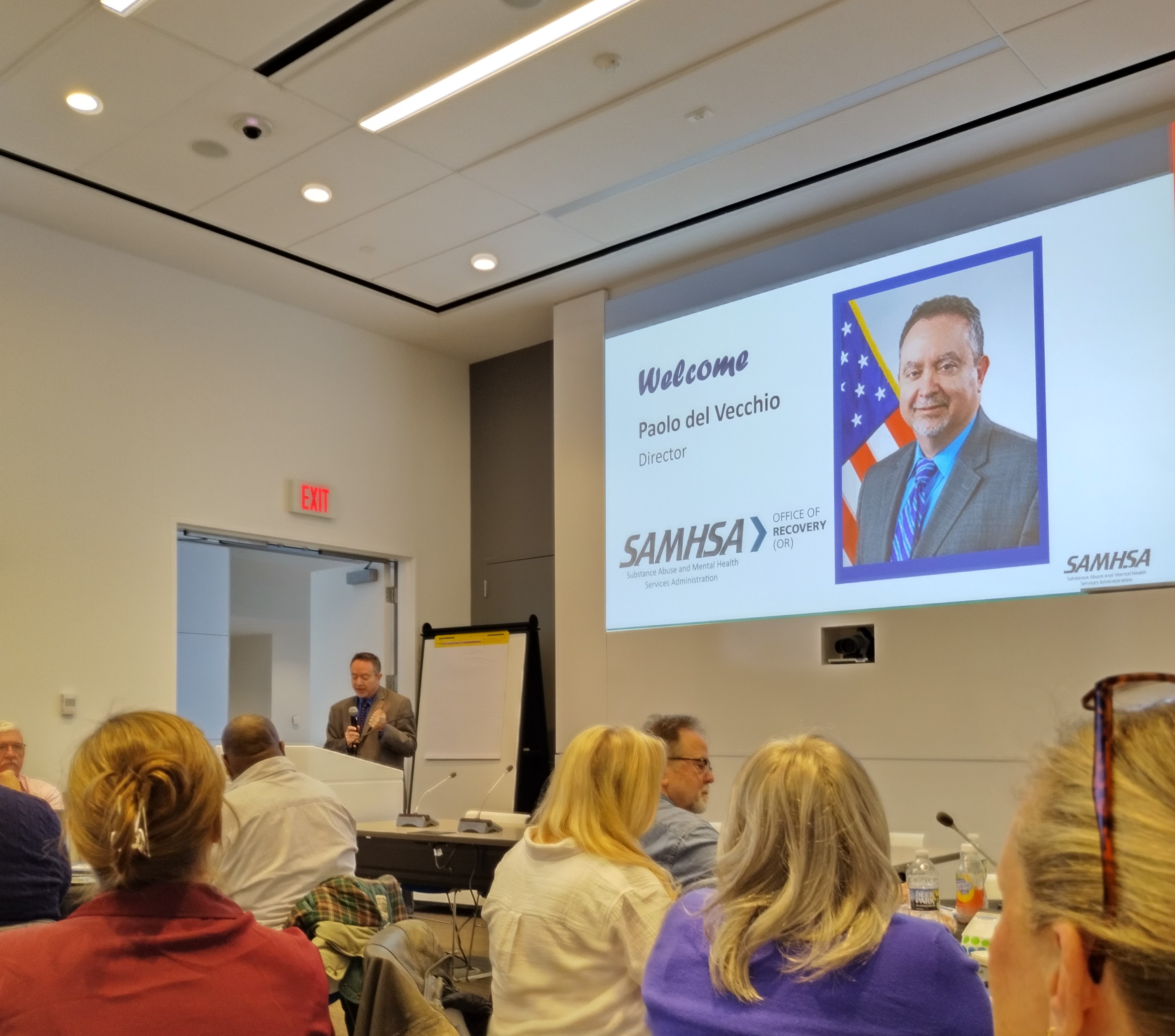
February 4 and 5th Harlan Serenity Foundation headed to SAMHSA (Substance Abuse Mental Health Services Administration) to assist with creating Family Care for recovery, providing lived experiences.
The opportunity will soon be available to learn more about what you can do to support those in Recovery.